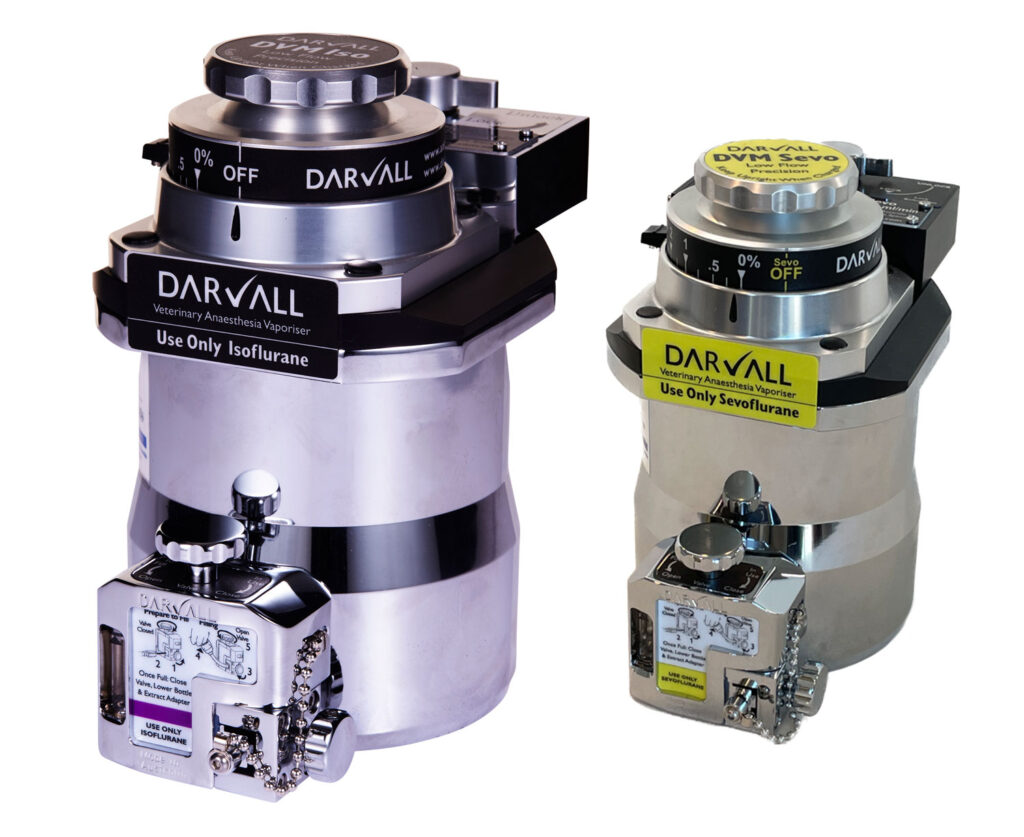
Darvall manufactures and supplies simple and predictable research animal anaesthesia solutions, ensuring excellent staff safety, low environmental contamination and optimal biosecurity.
Darvall has 15 years’ experience of supplying research animal facilities with anaesthesia equipment in Australia and around the world. Head of Engineering, James Dunlop BS, has assisted many institutes and facilities in setting up new systems and troubleshooting existing set ups. We supply equipment for anaesthesia induction, maintenance and managing hypothermia, all with a focus on welfare and safety. Users of Darvall equipment find that staff training is simplified, leading to standardised procedures, high efficiency set-up and induction, optimised quality assurance, reduced mortality, and reduced hypothermia.
Darvall Research Animal Anaesthesia Solution deliver our four imperatives: animal safety and welfare; environmental protection & sustainability; operational efficiency & operator safety along with cost effectiveness.
Darvall equipment is specifically designed for small animals, enabling the benefits of low-flow anaesthesia in a research setting. Our vaporisers operate twice as accurately as competitors at low fresh gas flows. The 10-year service interval reduces cost and biosecurity risks. When used with the Darvall Stingray absorber, consumption of anaesthetic gas is reduced by 90%, with associated cost savings & significantly reduced environmental contamination, along with greatly improved operator safety. Innovations of the Stinger Research anaesthetic machine allow simultaneous use in two circuits, or up to five face masks using the Darvall ZDS 5-gang manifold and ZDS face masks. The Heated ZDS Qube combats anaesthetic hypothermia in the smallest animals.
Laboratory animal environments often face multiple changes as they strive or safe, efficient, predictable and repeatable anaesthesia whilst always being cognisant of the welfare of animals and the staff that care for them. Add to this, major considerations about the impact of anaesthetic gasses on the environment, and the situation can become complex. Some of the issues that present themselves are:
Some innovative solutions have been implemented which have had unforeseen consequences:
The Darvall Stinger Research System is the product of 20 years of research, development and veterinary experience in anaesthesia in research situations. One system brings numerous advantages:
The Darvall Research Stinger is a highly versatile system allowing:
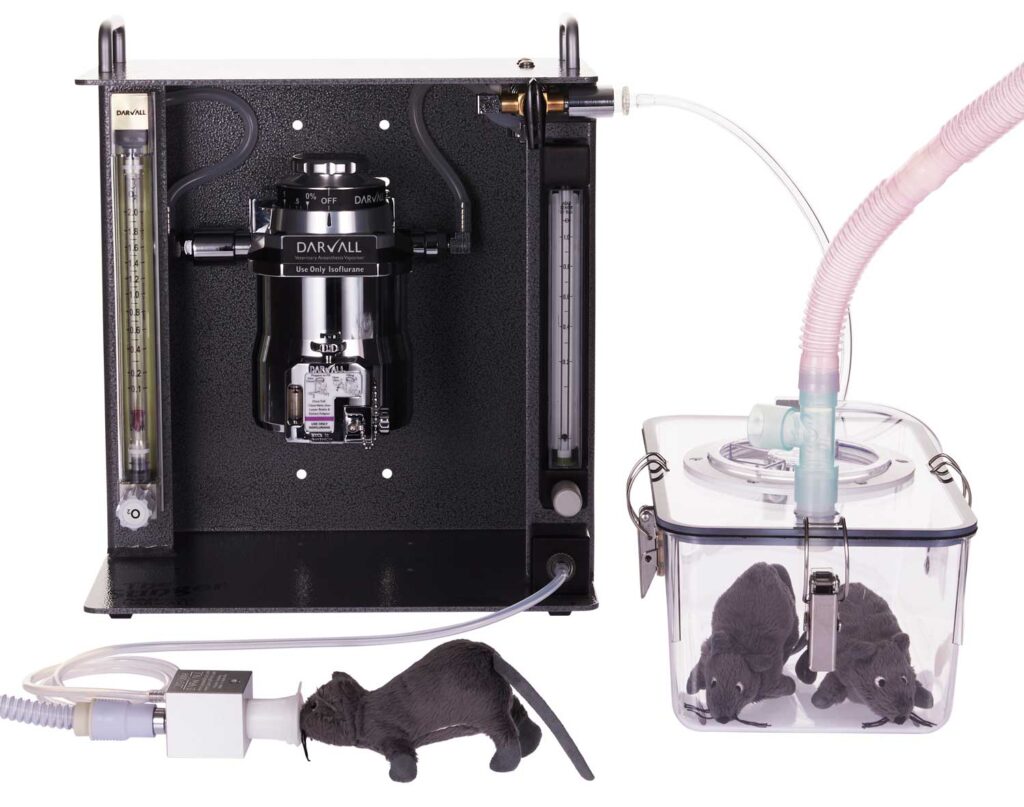
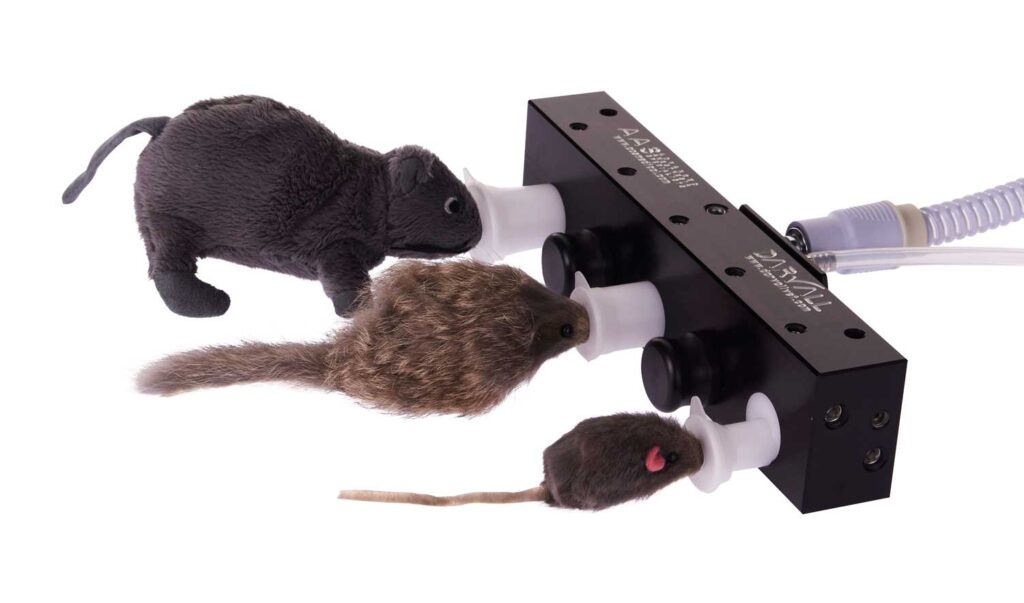
ZDS 5-station Manifold with ZDS Qube masks allows one vaporiser to deliver anaesthesia for up to 5 animals simultaneously, via face masks. Used for rapid procedures. Can use with all ZDS Qube Masks
ZDS 5-station Manifold with ZDS Qubes allows a single vaporiser to deliver anaesthesia for up to 5 animals simultaneously. This allows up to 1.0 M of working space between animals.
The patented Darvall ZDS (Zero Dead Space) face mask system overcomes the problems of older very small patient anaesthesia mask systems. ZDS masks use innovative uni-directional gas flow which eliminates the mask dead space, so prevents rebreathing of CO2 and provides very predictable delivery of anaesthetic gas to the animal’s nose. Fresh gas flows as low as 200 ml/kg/min. deliver stable anaesthesia with rapid response to changes in vaporiser settings (typically in 2 to 3 breaths). The ZDS Qube has interchangeable masks with soft diaphragms designed to seal on the nose of birds, reptiles, rabbits, rodents and exotics of all sizes which eliminates occupational waste gas pollution to the working environment. Because the mask system is sealed, the fresh anaesthetic and oxygen gas flow (200 ml/kg/min) flushes the expired breath containing CO2 out into the waste gas system.
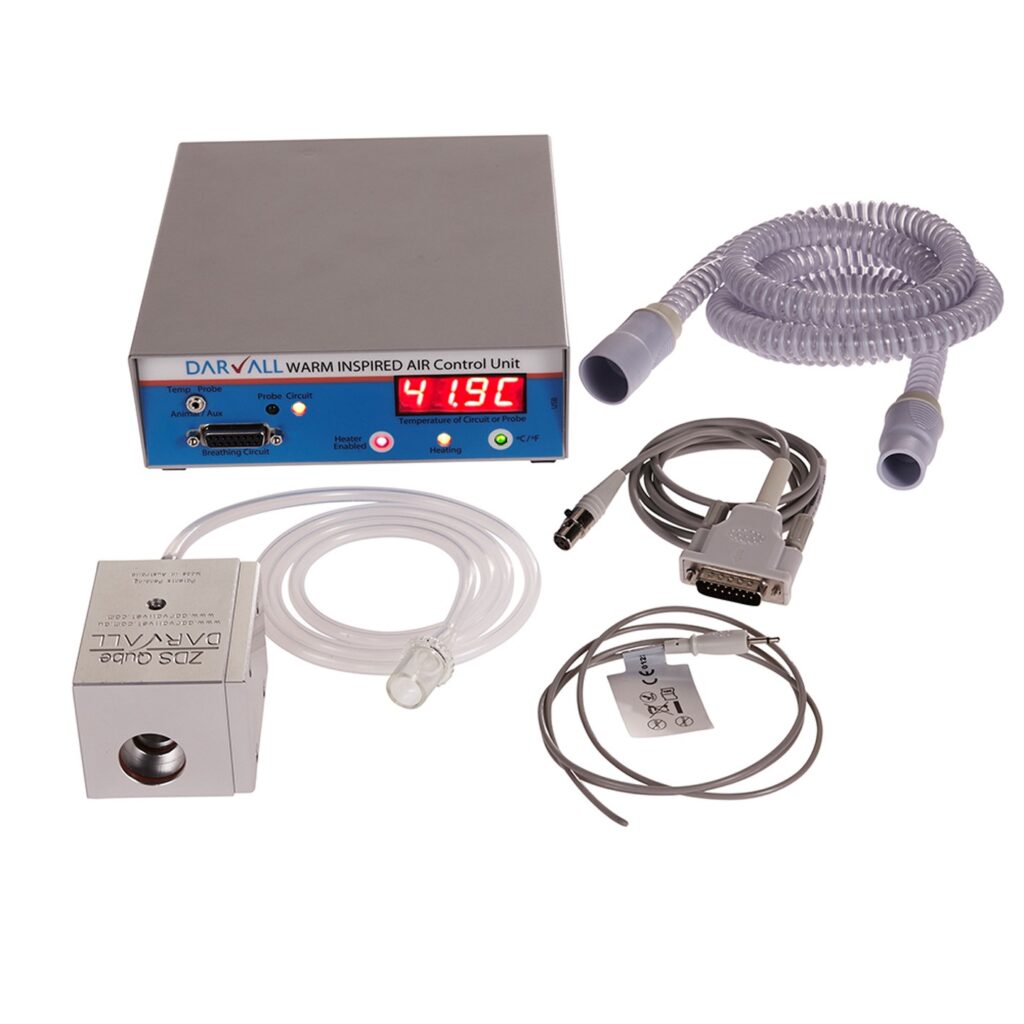
Darvall’s heated ZDS Qube provides a totally new solution to hypothermia in these very small patients by delivering warm inspired gas to the animal’s nose. The system incorporates animal and Qube temperature monitoring, providing closed loop feedback. There is computerised data acquisition capability via USB for display and record keeping.
Anatomic face masks are well tolerated by rodents, providing faster inductions with reduced WAG pollution and lower cost. Conscious rodents are happy to place their nose in a comfortable nose cone.
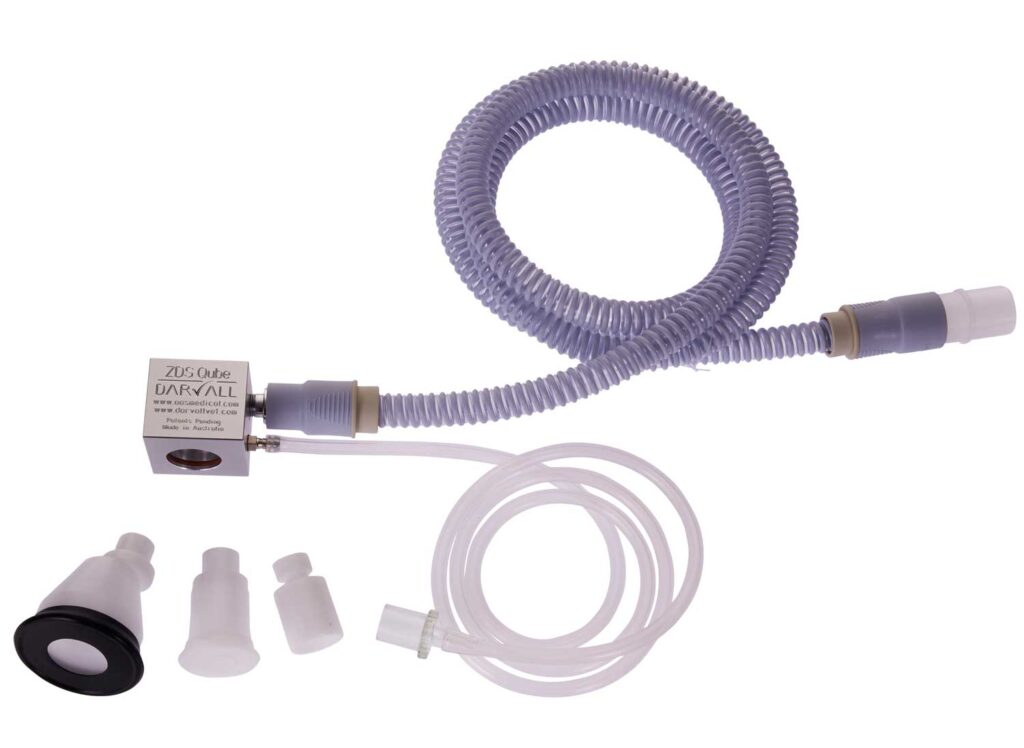
The Darvall ZDS Qube is a versatile tool for all small animal anaesthesia. The circuit can easily fit most anaesthetic machines.
Positive pressure ventilation is simple and easy with ZDS Qubes and Darvall Ventilator.
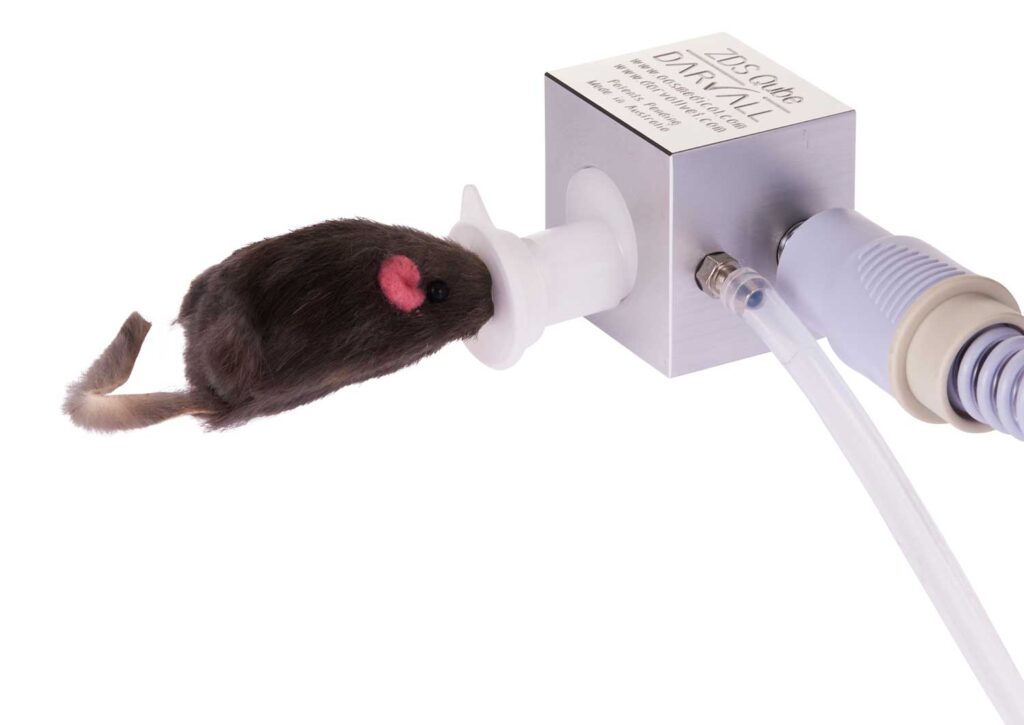
Combat anaesthetic hypothermia in small animals. Traditional non-rebreathing systems deliver cold, dry gas.
Darvall Heated Qube interacts with computer systems to deliver data display and anaesthesia record.
Non-sealing induction chambers require active suction removes anaesthetic gas from the chamber.
This results in a longer period for induction, requires higher fresh gas flows to balance suction, with added cost and occupational WAG & environmental pollution.
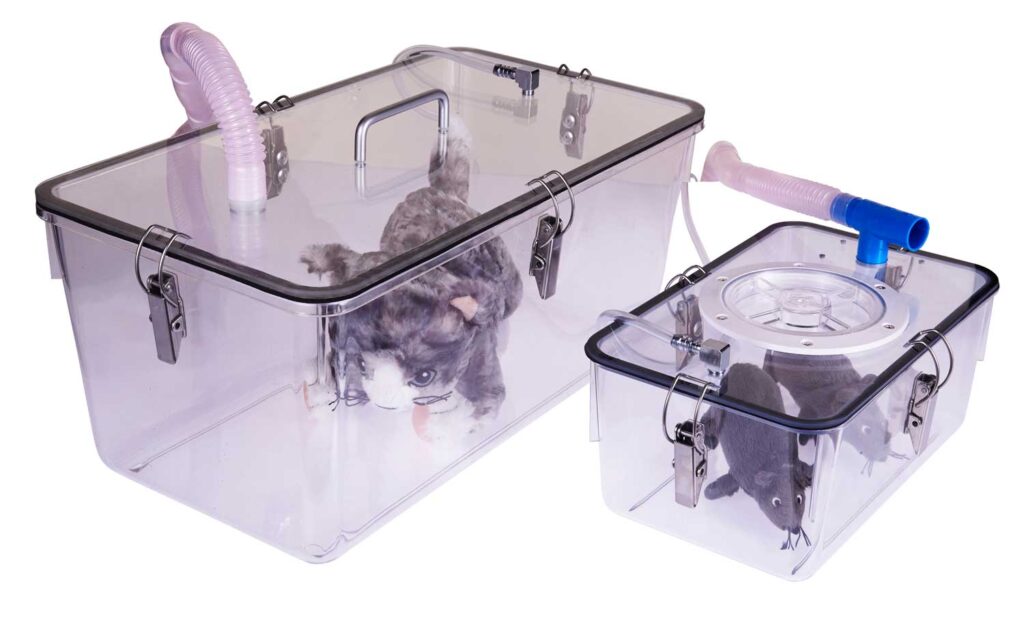
Darvall Induction Chambers Sealed induction chambers matched to animal size result in faster, lower stress inductions with less environmental WAG pollution. Darvall provide three sizes of induction chamber to suit all small animal sizes:
Darvall induction chamber are sealed, preventing any gas leakage. This leads to faster inductions and prevents WAG leakage, with benefits for the environment and staff. Built from a one-piece moulded base, the small chamber features an easy-access port. The moulded construction is easy to clean. There is a simple anaesthetic machine connection and WAG port to allow rapid flush out. The chambers can also be used for humane euthanasia.
The Darvall DVM Isoflurane Vaporiser is designed for small animal anaesthesia.
The new DVM Sevoflurane vaporiser has been developed with the same specifications and tolerance, making it an industry leader in veterinary and human anaesthesia.